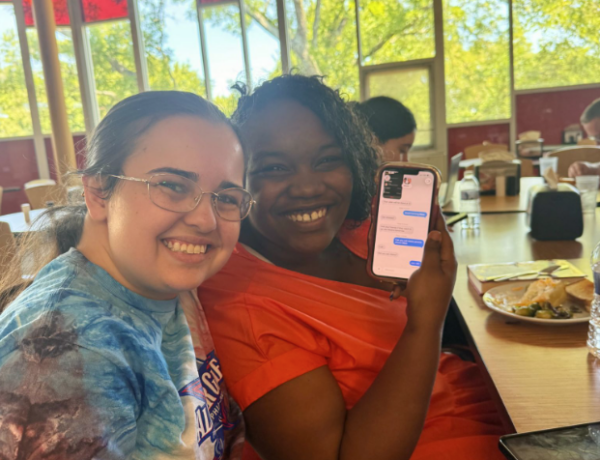
Arianna and Abbi at Ursinus College Dining Hall
This photo looks like two young women having lunch together.
And that is exactly why we love it.
These two young women met through one of our inclusive Integrate for Good summer programs on the Ursinus College campus. Over lunch in the dining hall, one of our favorite places for building connection and belonging, something pretty ordinary happened.
They decided they wanted to hang out outside of the program.
So they exchanged information, texted each other outside of class, and made their own plans to go see a movie over the weekend.
No staff coordinating it. No program putting it on the calendar.
Just two young adults making plans with a friend.
For many of us, that is such an everyday part of life that we barely notice it.
But young people with disabilities too often grow up with other people planning their days, making choices for them, arranging their social opportunities, and deciding where they go and who they spend time with.
This can unintentionally create dependence in the very places where we should be building confidence and autonomy.
At Integrate for Good, employment skill-building is about so much more than writing a resume or practicing for an interview.
It is learning to communicate. Learning to make a plan. Using technology safely and effectively. Taking initiative. Making choices. Navigating relationships. Building confidence. And developing the #socialcapital that opens doors to employment, community participation, friendship, and opportunity.
And sometimes, it looks like two friends sitting in a college dining hall figuring out plans to go to the movies.
I’ve been thinking about how much this lesson applies beyond disability services.
As leaders, educators, employers, parents, mentors, and colleagues, it’s easy to measure our value by how much people rely on us.
Maybe we should measure it differently.
Are the people around us becoming more confident because of us?
Are they making more decisions for themselves?
Are they building relationships and opportunities that don’t depend on us being in the room?
Are we creating environments where people can discover what they’re capable of and then get out of their way?
Whether we’re developing an employee, mentoring a young professional, raising a child, teaching a student, or supporting someone with a disability, maybe one of the best measures of our impact is this:
What can they do tomorrow that they didn’t believe they could do yesterday?
Sometimes the biggest wins look wonderfully ordinary.