When Sophia first walked through our door, it wasn’t exactly by choice.
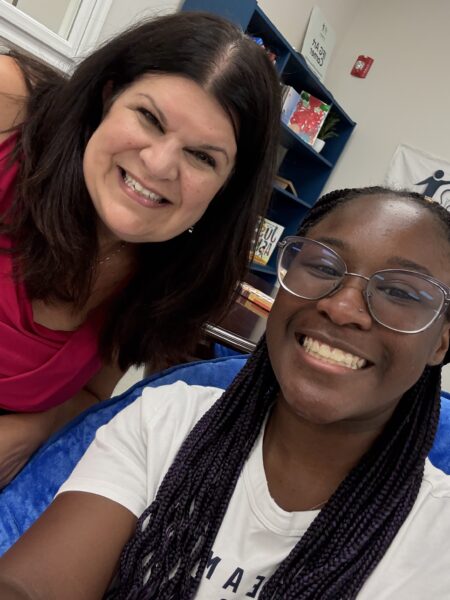 Her dad gently nudged her forward, hoping for something to click. Her eyes were fixed on the floor. Her voice barely a whisper. She refused to sit with the Leadership Incubator group. At lunch, she sat alone, scrolling on her phone, doing her best to disappear.
I didn’t push. I gave her space—and the quiet permission to show up exactly as she was.
From Isolation to Engagement: Sophia’s First Steps
Day two looked different.
She walked in more willingly. Still quiet, but this time… she sat closer to the group. Then she did something that surprised us all—she raised her hand. She had been listening. Absorbing. Processing. Preparing herself to step in. By day three, Sophia sat with us. She laughed. She contributed. She made connections—to the material and to her new classmates.
The Ripple Effect of Inclusion and Peer Connection
That same morning, a young man named Nick, also living with autism, joined the class. Like Sophia on day one, he hung back, unsure. But a few minutes in, he pulled up a chair and sat at the table. When I thanked him for trusting us and joining in, he pointed to Sophia and said,
It was because of her. She gets me.
I’m not sure what Sophia said or did—but I know this: Nick felt safe. He felt included. He felt understood. Without her, I think I’d still be trying to get him to the table.
This is what inclusion looks like. And it’s what we fight for every day.
We need the talents and gifts of all people in our workplaces, classrooms, and communities—including brilliant, brave young leaders like Sophia and Nick.