
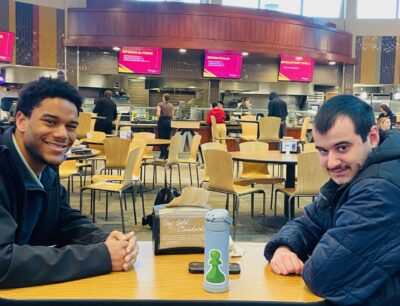
 One of the things we love most during programs here at our new home is heading over to the Ursinus dining hall for lunch. We get to interact with the campus and students and enjoy some laughs and conversation over some good meals. This past week, something small turned into something powerful.
Nate was sitting in the dining hall, easing into his break the way he often does—playing a quick game of chess on his phone while starting his meal. Chess is more than a hobby for Nate. It’s a way he organizes the world. Strategy, patterns, thinking three moves ahead—those things make sense to him.
That’s when Dean, a student from Ursinus College, walked over and asked if he could join the table.
Of course, we said yes.
Dean sat down next to Nate and quickly noticed the chess match unfolding on the screen. He admitted he didn’t know much about chess—but instead of stopping there, he searched for a connection. Within moments, he made one.
Dean is a member of the college’s lacrosse team, and he studies game film regularly to prepare for competition. He pulled out his laptop and opened the platform his team uses to break down plays and analyze strategy. As he began explaining formations, player movement, and split-second decisions, something shifted.
Nate put his phone down.
For the next 30 minutes, the two of them were completely engaged. Dean carefully walked Nate through the strategy behind different plays—how spacing creates opportunity, how one movement can open up the entire field, how anticipating the opponent’s next move is everything. Nate, who had never followed lacrosse before, leaned in with curiosity. He asked thoughtful questions. He made comparisons to chess. He wanted to understand.
What made this moment so meaningful wasn’t just the conversation about sports. It was the bridge that was built.
Dean didn’t focus on what separated them—different interests, different backgrounds, different areas of expertise. He focused on what connected them: a shared appreciation for strategy and critical thinking. By meeting Nate where he was—starting with chess—Dean created a space for mutual respect, curiosity, and learning.
When Dean had to leave for a team lifting session, they didn’t part ways as strangers. They left with plans to continue the conversation. Nate said he would look into lacrosse so he could be ready to learn more next time.
This is the heart of our work.
Real inclusion doesn’t happen through programs alone. It happens in everyday moments—when someone chooses to sit down, notice another person’s interest, and build from there. It happens when differences become doorways instead of barriers.
Because of supporters like you, these moments are possible. A simple lunch became a meaningful connection. A game of chess became a shared language. And two students walked away changed—not by a grand gesture, but by finding common ground.